
Technology
Two kinds of facility. One platform.
Kala runs two complementary types of compute facility — modular units we build and deploy directly on energy assets, and high-availability Tier IV data centres in major cities. Each is suited to its environment, and both are managed from a single remote platform.
Together they let us put the right workload in the right place: heavy, cost-sensitive compute where power is cheap and abundant, latency-sensitive workloads close to your users.
City data centres
Tier IV reliability, close to your users
In major cities, we host our compute in established, Tier IV–rated data centres — putting capacity close to users and networks, ideal for latency-sensitive inference and production workloads that need to sit near where they're consumed.
Cooling matched to the environment: these facilities are currently air-cooled, with hydro (liquid) cooling capability where required — rather than immersion, which is the right choice for remote, energy-site deployments rather than purpose-built urban facilities.
- Fault tolerancethe highest data-centre tier, engineered so that any single equipment failure won't interrupt operations.
- Concurrent maintainabilitycomponents can be serviced or replaced without taking workloads offline.
- Fully redundant infrastructurepower, cooling, and network paths are duplicated (2N / 2N+1), with no single point of failure.
- ~99.995% uptimethe availability standard Tier IV is designed to deliver, for workloads where downtime isn't an option.
- Carrier-dense connectivitymultiple network providers and low-latency routes to major population centres.
- Physical security and complianceenterprise-grade access control, monitoring, and the certifications expected of production infrastructure.
Modular energy sites
Immersion-cooled compute, built for the field
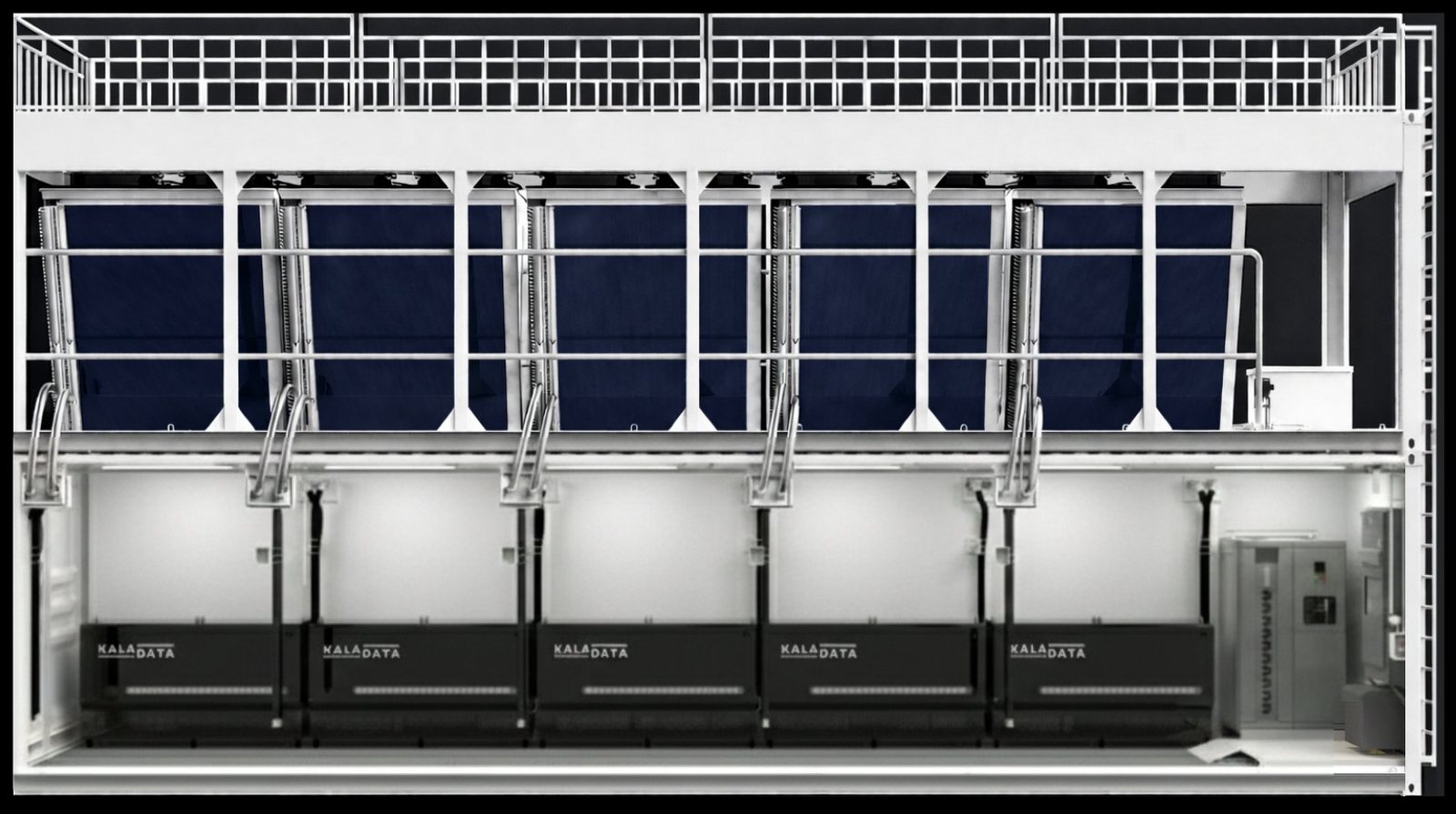
Our modular sites are prefabricated, containerised data centres we build and deploy directly at energy assets — often remote, off-grid, or in harsh conditions.
They're designed around immersion cooling, submerging hardware in dielectric fluid rather than air-cooling it — a choice that directly enables the thermal stability and dispatchability these deployments require.
- Superior thermal controldielectric fluid holds hardware at tightly controlled temperatures even in high-ambient desert heat, where air cooling struggles.
- Sealed against dust and contaminantssubmerged hardware is isolated from airborne particulates common at remote energy sites, removing a major cause of failure.
- Lower failure rates, longer hardware lifestable temperatures and no contaminants mean fewer faults and less downtime where a site visit is expensive.
- Sustained performance at peak loadno thermal throttling, so GPUs and ASICs run at full output continuously.
- Far greater energy efficiencyalmost no power wasted on fans and air handling; more of every kilowatt goes to compute.
- High density in a small footprintpack more compute into each container, delivering more from less land and fewer units.
- Silent and self-containeda sealed system that tolerates isolated deployments without fan noise or particulate ingress.
- Water-freeunlike evaporative cooling, immersion needs no continuous water supply, critical in arid, remote locations.
Efficiency
Why immersion wins.
Measured against conventional air-cooled infrastructure, the efficiency gap is not marginal.
Less power wasted on cooling — more of every kilowatt goes to compute.
One megawatt of compute in a standard 40-foot container footprint.
No continuous water supply required — critical in remote, arid sites.
Our modular sites ramp up and down for load response, peaking support, curtailment, and grid services such as FCAS where the site and market allow — which would ordinarily subject hardware to constant thermal cycling. Immersion cooling's thermal mass absorbs those swings, protecting hardware from the shock that aggressive cycling inflicts on air-cooled systems. The cooling choice and the dispatchability are linked: one enables the other.
In production
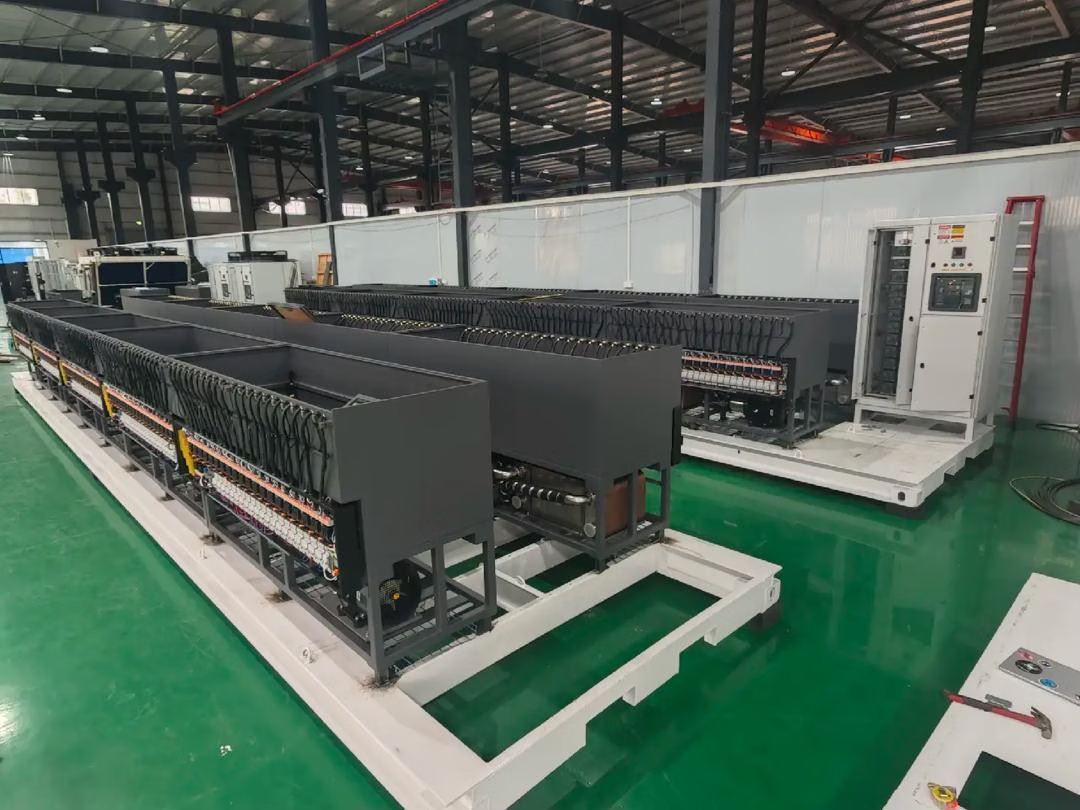
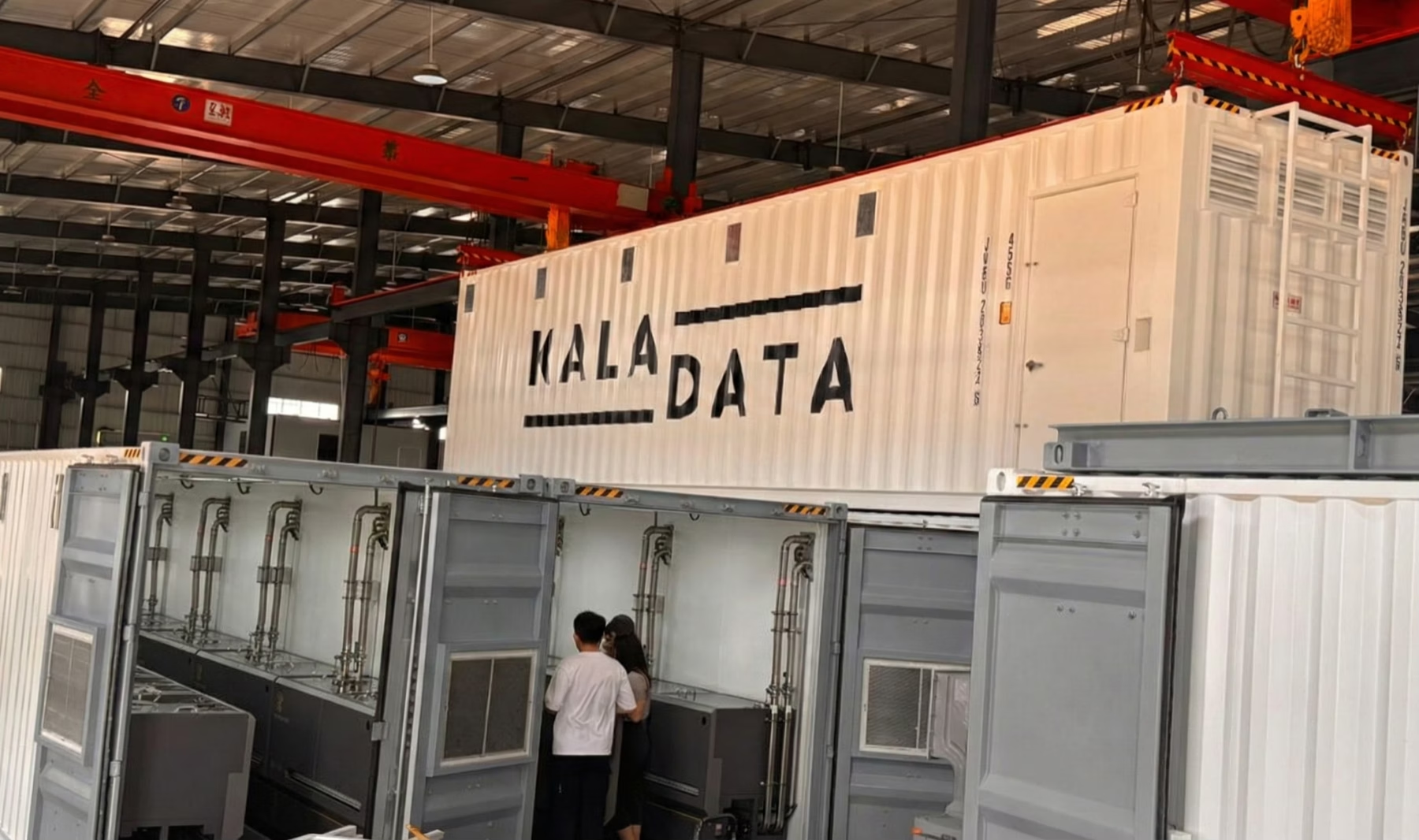
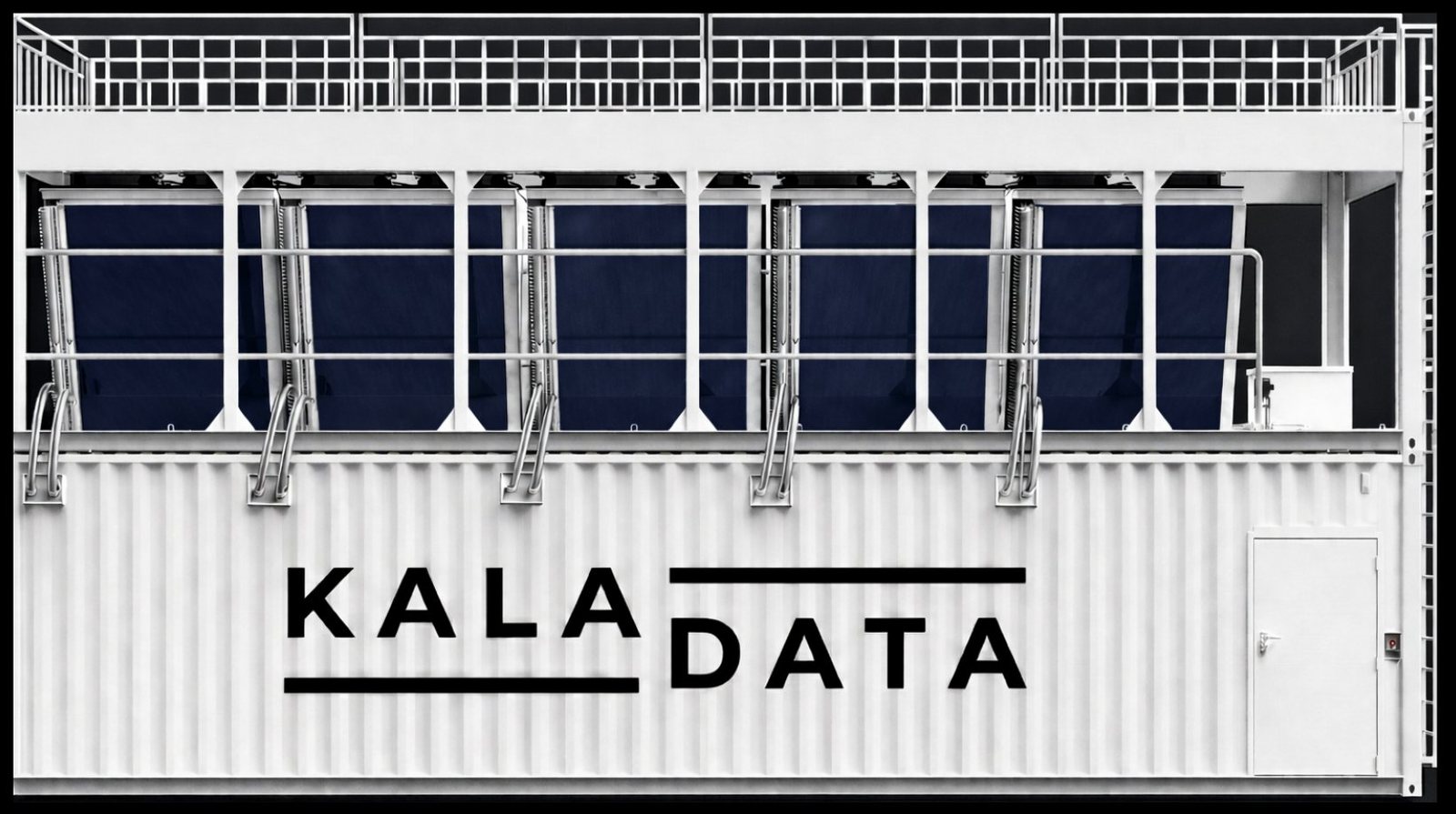
- Prefabricated, factory-tested unitsonly foundations, cabling and commissioning required on site.
- Genuinely dispatchable loadsheds or restores within seconds via site SCADA (Modbus/TCP, SNMP, REST), down to individual compute units.
- Modular and scalabledeploy one unit or many; expand by adding building blocks, not construction projects.
- Grid or off-gridwith or without existing transmission or pipeline infrastructure.
One platform
Kala Mesh ties it together
Whichever facility your workload runs in, you interact with one platform. Kala Mesh distributes workloads across our energy sites and city data centres with geo-aware placement — training where power is cheapest, inference close to your users — and where a specific configuration isn't free in our own fleet, sources it from our trusted partner network.
One platform, one API, one bill.
Remote management
Secure, real-time monitoring and control from whole facilities down to individual compute units, with automated curtailment, role-based access, audit logging, and API integrations.
Flexible compute
GPUs for AI and HPC, with workloads reconfigurable over time as needs evolve — on-demand, dedicated, or burst capacity through a single interface.
Geo-aware placement
Heavy training runs where power is cheapest. Latency-sensitive inference close to your users. Kala Mesh routes automatically — you set the constraints, the platform optimises.
Dispatchable by design
Load that responds to grid, frequency, and price signals where the site allows — capable of load modulation, curtailment, and frequency control ancillary services (FCAS) — without disrupting running workloads above the threshold you set.
At a glance
Facility comparison
| City data centres | Modular energy sites | |
|---|---|---|
| Location | Major cities; carrier-dense metropolitan areas | At energy assets — remote, off-grid, or on-grid |
| Cooling | Air-cooled (hydro capable) | Immersion (dielectric fluid) |
| Facility | Tier IV facilities | Prefabricated and operated by Kala |
| Best for | Low-latency inference, production workloads, strict uptime | Heavy training, HPC, cost-sensitive compute |
| Edge | Redundancy, carrier density, proximity to users | Cheap, abundant power; deploy anywhere |